Bursaries reports 2026
Charlotte Heaven (University of Manchester)
ARR 2026 | 17th - 19th June 2026 | Cambridge
Attending the ARR 2026 conference was a fantastic experience, which would not have been possible for me without the support given through this travel bursary. Cambridge provided a beautiful and inspiring setting for the meeting, creating a relaxed environment for networking and discussion along side the scientific programme.
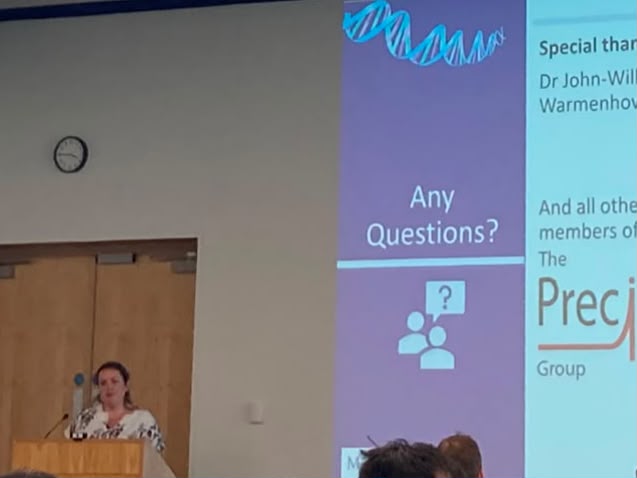 I was delighted to be invited to speak about my recent research with Dr John-William Warmenhoven at this conference on the in silico optimisation of clonogenic assays to improve RBE estimation. The feedback and discussions prompted by this talk raised important questions and allowed me to consider new perspectives and potential future directions for the work at a key time in the analysis.
The conference's focus on radiotherapy research, including specific tracks on models and DNA damage, aligned perfectly with my research interests and provided an excellent opportunity to learn about the most recent findings and emerging directions within the field. In addition to the scientific programme, attending ARR allowed me to develop my professional network. I was able to meet researchers at different career stages, discuss ongoing projects and establish new connections that may support future collaborations. As an early-career researcher, these interactions were particularly valuable for broadening my understanding of the wider research landscape and identifying opportunities for future development.
This travel bursary was instrumental in enabling my attendance at the conference, providing me with both scientific and professional development opportunities that would otherwise have been more difficult to access. I am very grateful to the ARR committee for their support and for inviting me to share my research.
Annet Nakkazi (University of Manchester)
ISMRM and ISMRT conference | 9th - 14th May 2026 | Cape town, South Africa
It was a great experience of attending the 2026 annual meeting & exhibition of International Society for Magnetic Resonance in Medicine (ISMRM) and International Society for MR Radiographers & Technologists (ISMRT), which took place in Cape town, South Africa from 9th to 14th of May 2026. This was my first time at ISMRM and I am very appreciative of the bursary I received from the Association for Radiation Research, which significantly contributed to my ability to attend the conference.
 The conference was packed with great knowledge spanning across tumour imaging for diagnosis, treatment planning and follow-up; body irradiation together with magnetic resonance imaging (MRI); insights on how to optimise MRI image quality; various MRI sequences to study flow of body fluids, MRI data analysis techniques, MR Spectroscopy, MRI safety, and use of AI in improving MR image quality and analysis. From these presentations, I was equipped with great knowledge that I will apply in my thesis, and also gained insights on practical things I can improve on to reduce animal motion while scanning (note: animal or patient motion greatly affects image quality).
Apart from that, the first two days were filled with educational sessions from world-leading experts in MRI research field, which helped us to understand a bit more about MRI and its role in diagnosing and treating a variety of diseases such as tumours, cardiovascular conditions, musculoskeletal conditions, neurodegenerative diseases and psychiatric disorders. I was particularly fascinated by sessions on translation of preclinical imaging to clinical imaging in brain tumours, delivered by Jeff Dunn (University of Calgary) and Jenine Lupo (University of California). Here, they highlighted key challenges in transitions focusing on differences in subject body sizes (mice brains vs men brains) and suitable protocols for efficiency in clinic. While protocols that can provide high-quality images can be run in preclinical models, these usually take longer time, and may not be efficient in the clinic, especially if the MRI machine is on high demand by patients. Thus, radiographers tend to apply protocols with shorter scanning times, resulting in low quality images, which can affect image interpretation. This highlighted gaps in studies needed to further develop and validate imaging techniques that can provide high-quality images but in a shorter time.
We also had a wide-range of posters and pitch presentations, some of which were relatable to my PhD work, and I was able to get contacts of these presenters with an aim of establishing a potential collaboration in the future.
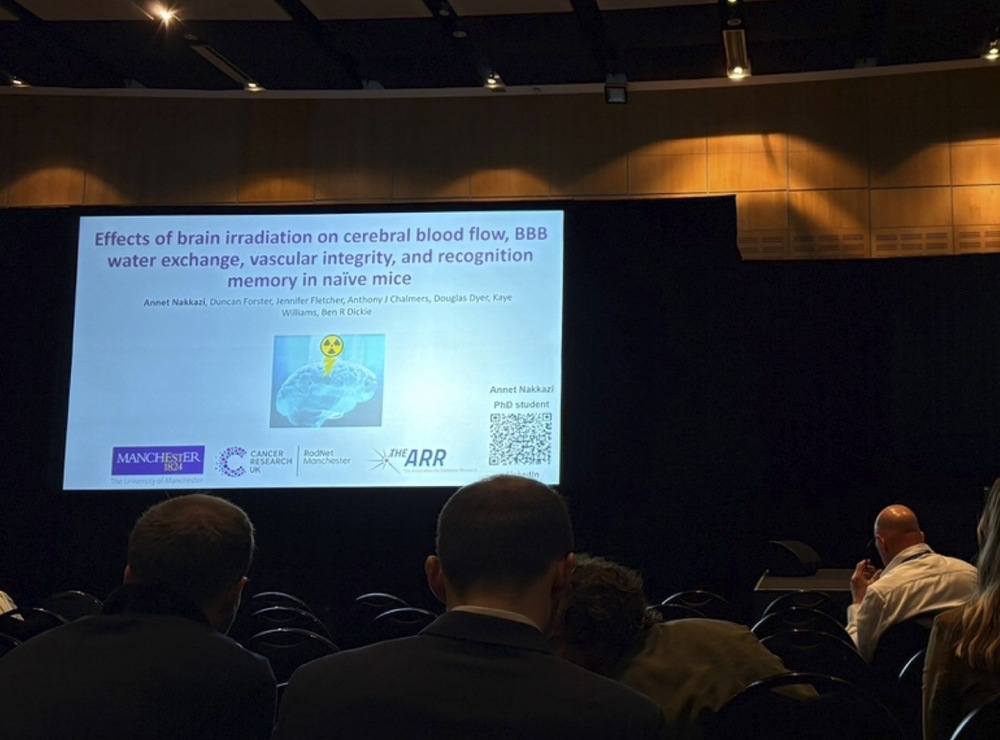
Lastly, sharing our research entitled *Effects of brain irradiation on cerebral blood flow, BBB water exchange, vascular integrity, and recognition memory in mice* to such an audience was an honour in addition to our abstract having received a Magna Cum Laude award from ISMRM. This award is given to a few top-ranked abstracts, so I truly felt grateful. I highly thank my supervisor, Dr. Ben Dickie, for the guidance and endless efforts that led to all these opportunities and recognitions. I also thank all other co-authors, especially Dr. Duncan Forster for spending hours doing experiments, Dr. Jennifer Fletcher for her contributions on statistical analyses, and then the insightful feedback on the abstracts from Prof. Anthony Chalmers, Prof. Kaye Williams and Dr. Douglas Dyer.
Ellen Slay (University of Manchester)
TERMIS - EU 2026 conference | 21st - 24th April 2026 | Palma de Mallorca, Spain
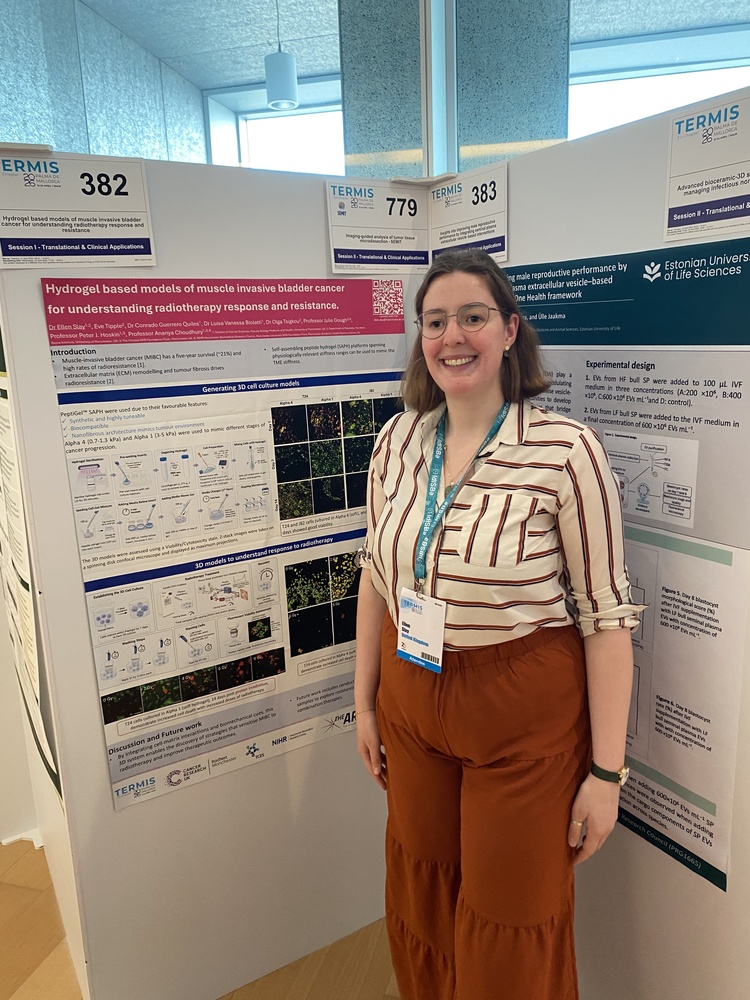
I recently attended the TERMIS-EU conference with thanks to funding from the ARR. Attending this conference proved to be a valuable and inspiring experience for both my current research and future career development. I thoroughly enjoyed the poster session where I presented my work and received a high level of engagement from attendees. The discussions were insightful and constructive, offering new perspectives on my research direction. Importantly, this session also provided an excellent opportunity to establish connections with fellow researchers, and I am optimistic that these interactions may develop into meaningful collaborations in the future.
 The conference featured a series of engaging and high-quality scientific talks. I particularly enjoyed the plenary lectures, which showcased cutting-edge advancements in the field. The presentations delivered by Prof Carlijn Bouten, Prof Jason Burdick, and Prof Maria Jesus Vicent were especially impactful, offering both depth and clarity while addressing key challenges and innovations in tissue engineering and regenerative medicine.
In addition, the career award sessions were highly motivating. Talks by Prof Martin Van Griensven and Prof Valeria Chiono not only highlighted their scientific achievements but also provided valuable insights into career progression, leadership, and perseverance within academia and research.
I also found the student and young investigator career-focused sessions particularly beneficial. The panel discussions on funding applications and establishing independent research labs were especially relevant to my current stage. These sessions offered practical advice, shared experiences, and strategies that I can directly apply moving forward. They left me with a renewed sense of motivation and a clearer understanding of how to navigate the next steps in my research career.
Overall, attending TERMIS-EU has been a highly enriching experience, strengthening both my scientific perspective and professional aspirations. I would like to express my sincere gratitude to ARR for the travel grant that made my attendance at this conference possible. Their support is greatly appreciated and has contributed significantly to my professional development.
Latest News
Looking for new journals to publish - consider the British Institute of Radiology (BIR) journal portfolio
11.09.2025
Looking for new journals to publish your research? Perhaps you might consider the British Institute of Radiology (BIR) journal portfolio. The BIR is a not...
Upcoming ARR meetings
ARR ECR Event 2027 - Autumn 2027 ARR2028- Manchester - June 2028
Join us!
Members have access to our travel and collaboration bursaries, as well as reduced registration rates to attend our meeting.
Bursary Deadlines
Travel Bursaries (non ARR meetings) and Collaboration Bursaries deadlines (annual): 31st March; 30th June; 30th September; 31st December
Supporting Partners